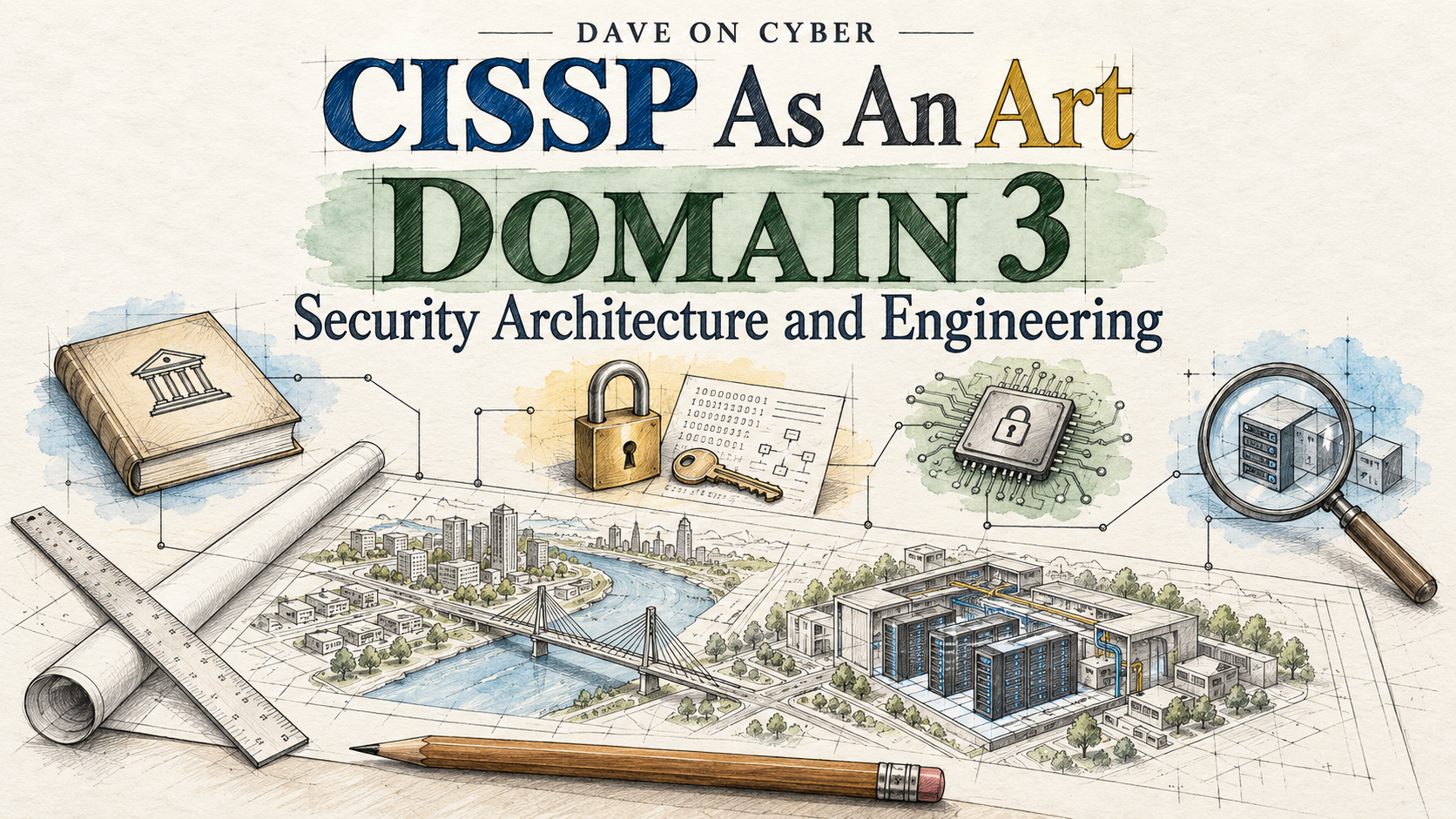
This eight-episode set introduces the foundations of security architecture through creative analogies, pencil-sketch artwork and straightforward explanations.
Students follow how security becomes part of a system’s design: identifying who accesses what, establishing boundaries, enforcing access rules and selecting security models. They then explore how security claims are evaluated, how leaders accept remaining risk and how built-in capabilities help protect the system.
** Learning objectives **
By the end of this set, students will be able to:
- Explain why security must be included in the blueprint before construction begins.
- Identify subjects and objects, and distinguish open and closed systems from open and closed source.
- Explain security boundaries, isolation, controls, trust and assurance.
- Describe the Trusted Computing Base, reference monitor and security kernel.
- Compare security models and recognise the confidentiality, integrity or conflict-of-interest problems they address.
- Explain how Common Criteria, Protection Profiles, Security Targets and assurance levels support evaluation.
- Distinguish certification from accreditation, including the roles of assessors and risk decision-makers.
- Describe capabilities such as TPMs, HSMs, virtualisation, memory protection and fault tolerance.
** What you will gain **
Students will gain a connected understanding of how a system is designed, protected, evaluated and authorised to operate.
They will be better prepared to explain these concepts in their own words, recognise them in practical scenarios and reason through CISSP questions. The set ends with a quiz, an assignment and practice questions that help students check their understanding and apply what they have learned.